

Introduction
This paper, prepared for the Trustees of Yes United provides a review of the current policies and position of health services in Scotland. It also examines the steps required to both stabilise and develop future healthcare services for the benefit of people living in Scotland.
SECTION 1:
Healthcare in Scotland
Background
The NHS in Scotland was established on 5th July 1948 arising from the National Health Services (NHS) act of 1947 and aimed to meet all the health needs of Scotland’s citizens free of charge. Prior to the establishment of the NHS, healthcare in Scotland was provided by a mix of voluntary, municipal, provident, private and government sources at both the hospital and community levels. After 1948, the Department of Health for Scotland took responsibility for co-ordinating a variety of community-based services including hospital provision, maternity care, midwifery, child welfare, immunisation, home nursing and mental health services. General practitioners (GPs), dentists, chemists and opticians remained self-employed, but Executive Councils were set up to arrange payment for services for NHS patients. Scotland’s over 400 hospitals became part of five regional health boards and eighty-five local hospital boards. As Fig 1 shows, at its inception the Department of Health for Scotland was intended to provide an integrated service for patients providing health services from cradle to grave.
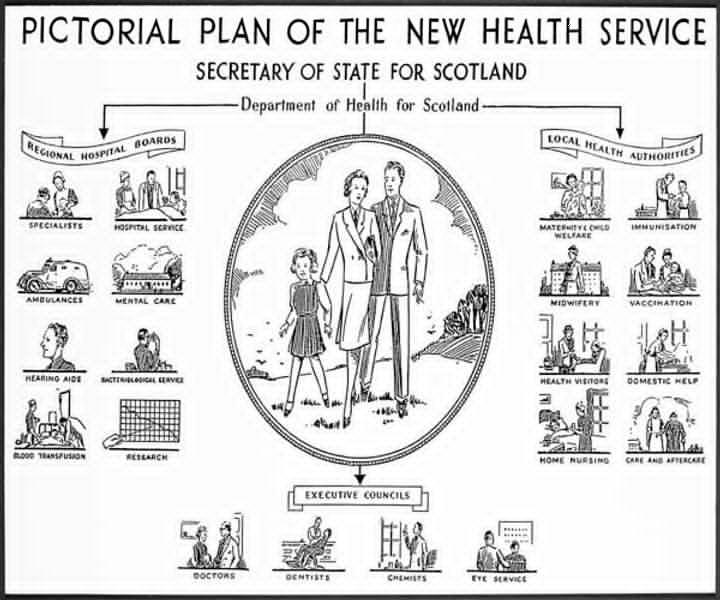
Figure 1: Pictorial Plan of Department of Health for Scotland 1948
Today there are fourteen territorial NHS boards, seven special NHS Boards and one public health body. Between them they employ some 140,000 members of staff. Each board is accountable to Scottish ministers supported by the Scottish Government Health C Social Care Directorates. Territorial Boards are responsible for the protection and the improvement of their population’s health and for the delivery of frontline services. Special NHS Boards support the regional boards by providing a range of specialist and national services. In 2025 the 14 boards were brought together under two collaborative sub-national structures (Scotland West and East) to facilitate population planning and service delivery.
All NHS Boards work closely with partners in other parts of the public sector to fulfil the Scottish Government’s National Performance Framework and National Outcomes.
Development of Healthcare in Scotland
Since its inception in 1948 our healthcare system has grown exponentially. By necessity, much of that development has been piecemeal in nature, responding to increasing
demand in a particular service area or in response to the development of new technology and treatments. The development of healthcare specialties was driven by evidence that specialist services greatly enhanced patient outcomes both in terms of quality of life and survival. Whilst it is generally accepted that these objectives have been realised, the loss of generalist doctors has resulted in insular service development, the creation of ‘silo’ ways of working and the unintended consequence of creating barriers to joined up patient care. The constant strain on the service from increasing demand, staffing and financial pressures has exacerbated the situation leading to a service which is struggling to meet the needs of the population it serves.
Healthcare performance in Scotland has not returned to pre pandemic levels. In many areas service development has stalled. There are probably two main reasons for this. Successful alliances and working relationships were disrupted during Covid, whilst the daily toll of frontline working resulted in many skilled and experienced staff leaving the service. Staff across all professions report that they are firefighting daily to stop services falling apart.
Interestingly, during the recent junior doctor strikes in England, admittance rates for patients attending A&E were drastically reduced. This was attributed to the fact that consultants (released from other commitments on strike days) were on duty in A&E departments and their skill and experience resulted in quicker and more decisive decision making. The role of cardiologists in A&E was deemed particularly impactful.
We often hear that in some service areas NHS Scotland outperforms the other constituent parts of the U.K. However, such comparisons should be treated with caution due to differences in measuring and collating information between countries. We should be in no doubt that health services in Scotland are in a precarious state.
Socio economic factors and health
The Institute for Public Policy Research comments that while reforming the NHS and addressing backlog is important, “most of what shapes our physical and mental health lies outside the health system. Without tackling these root causes, we won’t see the gains we need”.
Life expectancy for both men and women in Scotland remains the lowest of all four UK countries. The negative impact of social disadvantage on health outcomes is well known, reflecting factors such as job stability, pay, housing quality and education.
Health consistently worsens as deprivation increases and it is those living in our most deprived communities who have been hardest hit by years of austerity and the after-effects of Covid. In Scotland the correlation between deprivation and health outcomes
is dramatic. In the most deprived areas of Scotland, men are dying more than 13 years earlier than their less deprived peers, and women almost a decade earlier. At extreme ends of the spectrum, this differential can be as much as 25 years.
The link between social deprivation and healthy life expectancy (HLE), the number of years a person can expect to live in good health, is even starker than for life expectancy. National records of Scotland show that HLE has been falling for both men and women since the 2010s. This means that in the most deprived areas women live only 60% of their life in good health, while men spend around two thirds in good health. The pressure this puts on existing health services is enormous. There are several reasons for this – drug/alcohol abuse, diet, access to health care, and social media misinformation, while fewer citizens access healthcare in poorer communities. The proportion of O/P and GP appointments where the patient did not attend is higher in the most deprived areas, and among men in their 20s and 30s.
Long term preventative interventions are required to resolve these issues, rather than repeated short- term measures. Scottish Government, local authorities, businesses and 3rd sector need to come together and collaborate closely with local service providers and service users. The changes required will need a societal shift in mindset moving from one that primarily associates healthcare with hospitals and treatment to one based on primary care and community-based services which focus on preventative healthcare and living well. We need to ensure that everyone living in Scotland understands the vision and the reasons for pursuing it. We need to demonstrate how it will change their and their family’s life for the better. Using peoples lived experience will be an integral part of the evidence base for change.
The Scottish government has introduced several socially progressive policies such as the baby box, early years support, free further education, free prescriptions and free personal care for over 65s. The Scottish government used powers devolved through the Scotland Act 2016 to introduce the Scottish Child Payment (CPS). It is estimated that SCP alone will keep around 40,000 children out of relative poverty in 2025/26.
However, the ability to develop further wellbeing policies will be severely constrained without Independence and the concomitant transfer of full powers from Westminster to Holyrood.
Comparison with other systems
Analysis from The Organisation for Economic Co-operation and Development (OECD) suggests that there is no ‘model’ health system. When grouped together, countries sharing institutional characteristics such as funding model, choice of providers and ‘gatekeeping’ roles (such as GPs) show variations in efficiency and efficacy within each group. However, the results do suggest that a primary care orientated system helps improve population health in people living with asthma, chronic obstructive pulmonary disease or congestive heart failure. Timely and effective community-based healthcare could reduce hospital admissions for these prevalent conditions.
Further OECD analysis shows that despite also being under strain from an ageing population, workforce shortages, increasing costs of new treatments and technology, other European health systems outperform Scotland in waiting times and time to diagnosis.
In looking at the composition of other health systems across Europe there seem to be two significant variations with Scotland. Firstly, we have one of the lowest bed numbers in Europe, a problem exacerbated by the fact that a significant number of beds are not available due to patients experiencing a delayed discharge. According to Audit Scotland (Jan ’26) this figure was 11.7% in 2024-25. Secondly, we have the fewest CT and MRI scanners per head of population which severely hinders our diagnostic capability.
Challenges to health care within Scotland
The performance difference between Scotland and other European countries is attributed to additional Scottish problems such as poor health, insufficient funding and workforce issues. Scotland has long patient waiting times for both outpatient and inpatient services, long A&E waiting times, lack of inpatient beds and chronic understaffing issues leading to increasing mental and physical health problems. The key requirements to resolving these issues have long been known. Namely, the integration of health and social care services, decentralising care into community settings to provide early intervention and release the pressure on the acute setting. Indeed, successive government policies have centred around the need to address these issues. This paper seeks to answer the question of why such policies have not translated into change on the ground and provide solutions to these implementation gaps.
Challenges to healthcare from outwith Scotland
Funding Mechanism:
Annual changes to NHS funding in Scotland are based on Barnett Consequentials where Scotland (Wales and Northern Ireland) are allocated a compatibility and pro rata population share of money spent on public services in England. Therefore, any reduction in NHS spending in England has a knock-on reduction to Scotland’s allocation of funding.
Privatisation:
Although there is little appetite in Scotland to move away from a publicly funded health service this could be jeopardised by decisions taken by Westminster. In England and Wales the 2012 Social Care Act removed sole responsibility for providing healthcare from the Westminster government, thereby opening up the service to private providers. Indeed, NHS England commissioners are required to offer opportunities for any NHS or other private provider to bid to run NHS funded health services. There is now a listing of private companies suing commissioning groups if they are not awarded contracts.
The reason that the Scottish NHS has been subject to less privatisation is that as health is a devolved power the 2012 Social Care Act which opened up the service in England and Wales to private providers does not apply here. However, the danger is that as healthcare becomes increasingly privatised in England the public spend will be reduced resulting in a knock- on reduction in funding allocated to Scotland. (Power devolved is a power retained). This will result in publicly funded services in Scotland becoming unaffordable thus enabling private providers to swoop in. There is no evidence that privatising healthcare services results in improved outcomes.
The coronation of Andy Burnham as Prime Minister does not augur well for keeping our NHS publicly funded. As health secretary he was the first person in the UK to allow the privatisation of an entire hospital. This project was initially lauded, but ended in chaos, when the provider pulled out as they were not making the expected profits; the NHS was left to pick up the pieces.
SECTION 2:
Evidence Based Decision Making and Transformational Change
We need to know where we are now and what needs to be delivered before we can decide what structures are required to support and deliver transformational change across the NHS. In order to do this, we need to carry out a forensic analysis of current processes across healthcare. Establish what works, what doesn’t, what are the barriers in the system? This work needs to be observational and not anecdotal as the latter tends to say “what should happen” rather than what actually happens. Once this baseline information is known, we can then look at what needs to be done to address the ‘blocks’ in the system. Are there local changes to ways of working that will address problems? What can be done with current resources within and between services to work towards service transformation? Once this stage is achieved, it usually becomes obvious what additional resources are required to complete the change process. Sometimes radical reform and investment is required, but small changes can often transform services. This needs to be a ground up process. Staff will already know what the barriers to change are in their workplace and most likely what can/needs to be done to facilitate changes required. The problem is that this local knowledge and ideas are currently not being captured anywhere and so are ‘lost’ in the system. Forensic analysis can also reveal small things that are having a disproportionate negative influence on processes and procedures, thus providing an evidence base of the current state of play and what needs to happen to move forward. There are areas of good practice throughout the services, where teams have already transformed services at a local level. A national status report will allow us to record C share these examples.
It is critical that the analysis is treated as fact finding only. It must not be used as a tool for recrimination or apportioning blame, as this would make it very difficult to get staff to engage with the process and be honest about existing problems. However, although the work needs to be carried out by people with experience in healthcare, we cannot expect existing staff to carry out the analysis. There needs to be additional support working closely with local teams to produce the detailed information required. Staff must trust and buy in to the process, rather than being told to engage; partnership working will be essential. External audit and business advisory services should not be used. Previous experience of such organisations shows a flurry of activity and ideas at the start, but this usually does not lead to meaningful change in the long term. This is because they work at a superficial level and tend to promote ideas based on the theories of management and process that don’t reflect the reality of service delivery in the NHS.
There also needs to be a sea change in how efficiency and efficacy is viewed. It’s not about ‘managing’ budgets or targets, as true transformational change is about managing people and creating trust between staff and organisations. It’s creating a platform that allows local skills and knowledge to come to the fore. It’s about empowering and motivating people by them realising that they are being listened to and that this time ‘something will be done”. Whenever people are given permission to develop and implement their own ideas, they usually respond positively.
Such analytical work would be the first and key step of solving the ‘implementation gaps’ referred to in this paper.
SECTION 3:
Government s Culture
For too long, the Scottish NHS has been used as both a political football between parties, and as a political tool by the party in government. Accordingly, many decisions made over the years have emanated not from an evidence base, but on the optics of how the decision will look to the electorate. These announcements tend to be standalone interventions such as money for staffing or ‘creation’ of some adjunct to existing provision. These actions may play well with the public. After all, who wouldn’t think that more staff/money/extended service is a good thing? However, what’s important is that any investment is made in the correct place and at the correct time. Without this, many initiatives launched in a blaze of publicity do not result in improved patient outcomes and often wither on the vine without being implemented. A serious problem is that many of these decisions are made by civil servants who have no experience or understanding of either operational management or clinical decision making. Often government will override informed proposals coming from the service because “it’s not what the minister wants to hear”. That’s despite the service proposals having been crafted over many months of consultation, involving data review, pilot studies and input of knowledge and skills from senior health professionals and other staff. The negative impact of this on staff motivation cannot be overestimated. Not to mention the waste of expensive man hours which have been put into the proposals.
The people of Scotland elect politicians to act in their best interests. This means putting aside party political differences, enabling joint ownership and responsibility for collective decision making. This is the only route to efficient and effective decision making that can ensure long term stability for our NHS.
In the early 2000s, Denmark radically reformed the delivery of cancer services which transformed them from having very poor cancer outcomes to being one of the top
performing nations in the world. An outstanding feature of this success was a sense of political consensus, with all major parties agreeing that cancer should be a priority. As a result, a coherent strategy developed allowing long term service and workforce planning and ensuring continuity of service even through changes of government.
SECTION 4:
Leadership in the NHS
Research from the King’s Fund demonstrates conclusively that leadership quality represents the most influential factor shaping organisational culture in the NHS, with strong leadership correlating directly to improved patient satisfaction, reduced mortality, better financial performance, higher staff engagement, and enhanced overall quality of care. In parallel, the Kings Fund notes that the NHS spends less on management than equivalent international health systems, indicating that the media and political mantra that there are too many managers in the NHS is a fundamental misunderstanding. Rather, they argue that “the problem isn’t too many managers but too few with the right skills and capabilities. Research shows that even marginal increases in the number of managers can lead to statistically significant improvements in performance, as measured by patient experience, reduced infection rates and overall efficiency. National bodies and regulators encourage a culture of looking upwards to the centre rather than out to patients and communities This results in an overly centralised system that may distort priorities and disempower staff delivering care. When there are high vacancy rates and short tenures, NHS performance is most challenged. This turnover of leadership undermines the sustained effort that genuine organisational transformation demands, creating cycles where problems exist whilst leaders rotate through.”
It should be noted that many of the management and leadership roles in the NHS are undertaken by clinicians and allied health professionals. The King’s fund refers to ‘accidental leaders’ where those in clinical roles have taken on leadership roles not through deliberate career development but through circumstance, organisational need, or proximity to a problem that needs fixed. Clinicians are frequently unprepared for these roles, and research reveals that often little or no training and support is available to them. The King’s Fund broadly attributes the current situation to the apparent demise of a graduate training scheme for hospital management, leading to unprepared and unskilled people learning roles on the job and ‘muddling through’ to the detriment of the service and those working with them. As a result, the King’s Fund suggest a system of regulation and establishing a College of Executive and Clinical Leadership to train and develop senior managers of the future.
SECTION 5:
WHERE ARE WE NOW?
Acute Sector
In 2025 the Scottish government published its NHS Scotland Operational Improvement Plan, Health and Social Care Service Renewal Framework and the Population Health Framework.
The plan focuses on 4 critical areas that the government is committed to delivering:
Improving access to treatment
Shifting the balance of care
Improving access to health and social care services through digital and technological innovation
Prevention – ensuring we work with people to prevent illness and more proactively meet their needs
This policy document was broadly welcomed by both Audit Scotland and the BMJ. However, Audit Scotland’s 2025 report noted that the deep-seated problems facing Scotland’s NHS make the service unsustainable in its present form.” Since 2019 extra funding of £3bn has been provided and more than 20,000 additional staff have been hired, but performance has not improved in line with commitments made by the Scottish Government. It added that although hospital based activity had increased in the past year, helping to cut waiting lists and waiting times, performance remained below pre-pandemic levels. The report also repeated warnings that the service would need to reform to meet demand. It said, “Improvements in productivity and reform of the health care system are essential if health outcomes are to get better, health inequalities are to be reduced and service delivery to improve.”
Despite funding of £20bn per year which is 25% higher than a decade ago, the report warned that the NHS in Scotland remains financially unsustainable with seven NHS boards requiring additional funding in the form of loans (brokerage) from the Scottish Government. These loans are expected to be paid back once the board achieves financial balance. However, since 2019/20 only one territorial board has repaid any brokerage.
The report recognised that the Scottish Government had made progress in setting out plans for reform, but the lack of clear actions, time frames and accountability makes reporting on progress difficult. It also noted that the ambition to move care into communities was a longstanding policy but had yet to be delivered.
The Health and Social Care Partnerships set up in 2014 to facilitate joint working between Boards and Councils have failed to deliver the required changes. However, the auditor general for Scotland commented “there is a persistent implementation gap between policy ambitions, dating back over a decade, and delivery on the ground. This time round it’s vital that the Scottish government delivers on its reform plans. That means publicly setting out the detailed, measurable actions that will enable change and help everyone understand how a different health service will work. The deputy chair of BMA Scotland stated that repeated warnings by Audit Scotland about the unsustainability of the present service should not be ignored. She said that turning the NHS around will require honest, brave conversations and crucially delivering the changes that Audit Scotland and many others have already identified. The Audit Scotland annual report further stated that the persistent implementation gap between policy ambitions and delivery on the ground needs to be addressed.
In order to resolve the persisting implementation gap, we need to understand the detail of existing barriers to change, as without this, any service redesign or addition of staff and resources will be akin to rearranging the deckchairs on The Titanic. Any proposals for reforming the NHS including the formation of new bodies to drive and support change must be evidence based.
Recently, as part of its reform strategy the Scottish government has created a new body intended to support health and wider public sector transformation across the country. This new body known as Public Service Delivery Scotland (PSD Scotland) has been created by merging two disparate bodies, NHS Education for Scotland (NES) and NHS National Services Scotland (NSS). There is no available information to suggest that this was an evidence based decision; furthermore such a merger risks losing valuable skills and experience from one, if not both, of the original organisations.
Until we have a detailed position statement of what’s happening on the ground at local level there should be a moratorium on introducing, and review of, new committees, institutions or ‘oversight’ boards at government level. We need to know what needs to be delivered before we can decide what structures are required to support and deliver transformational change across the NHS. The work required to gather and collate our information base could be paid for from the government’s fund “centrally retained for national programmes and initiatives”. This fund sat at £0.4billion in the 2024/25 health budget
GP Services
General practice and primary care are where 90% of healthcare encounters take place and it has a key role to play in supporting efforts to reduce inequalities in health and in
people’s use and experiences of healthcare. In Oct 2025 the government announced additional funding for GP services of £531 million over three years. More recently they announced the creation of new walk-in clinics to help people access primary care physicians and GPs more easily, located in areas where the health services are under most pressure. The government has also committed to 800 extra GPs by 2027.
A number of worries have been raised about these new centres. Ranging from concerns around information sharing with GP practices to concerns around their effectiveness, affordability and staffing. There doesn’t appear to be an evidence base for their creation.
The 2018 GMS Contract is a joint agreement between the Scottish Government and the Scottish General Practitioners Committee (GSPC) of the British Medical Association.
Its key aims were to:
Refocus the role of GP as expert medical generalists, enabling GPs to do the job they are trained to do
Deliver better care for patients and to place general practice at the heart of the healthcare system
Establish multidisciplinary teams (MDTs) of different healthcare professionals who come together to provide a range of services in communities for those people in need of care
Primary care in Scotland has become aligned with social services and health and social care organisations have merged into Health and Social Care Partnerships (HSCPs). The aim of the partnerships is to improve community care for patients and facilitate working relations between different community organisations. There are 31 HSCPs in Scotland working towards a set of national health and wellbeing outcomes. All partnerships are responsible for adult social care, adult primary healthcare and unscheduled hospital care. Some are also responsible for children’s services, homelessness and criminal justice social work.
The Royal College of General Practitioners states that “general practice is the cornerstone of the NHS and is integral to the vision of a healthier, more equitable Scotland”. They state that general practice is in perpetual crisis, citing a shrinking workforce, stagnant IT and infrastructure. Chronic lack of investment in general practice means some practices can’t afford to employ more GPs while others, particularly in rural areas, have persistent recruitment challenges. Despite the GP workforce increasing, there are at least 84 fewer whole time equivalent GPs in Scotland than in 2013. This is due to increasing numbers of GPs reducing from full time hours. The separation of practice GPs from out of hours care is becoming an escalating problem for care provision.
Social Care
In Scotland there is an entitlement for free personal care for over 65s. Payments for personal care are universal and are not means tested. This social care can be delivered at home, in the community, or in a care home. A large proportion of adult social care is provided by unpaid carers, with the government estimating that there are around 788,000 unpaid carers in Scotland including 44,000 under the age of 18. An ageing population means increasing demand on care services and at the same time, there are significant staff shortages, with many European care workers leaving as a result of Brexit. High staff turnover rates that reflect poor pay, burnout and stress, are exacerbating the crisis. Complex funding arrangements are leading to delays in accessing care.
Whilst government sets out the overall strategic framework for delivery of adult social care, local authorities have a statutory responsibility to provide adult social care services. Local authorities and NHS boards work together to deliver an integrated service via Integrated Joint Boards. However, these boards have had limited success in delivering the required outcomes.
After years of delays and disputes centred around concerns over costing and a lack of detail in the plans the Scottish Government has abandoned its idea to introduce a National Care Service (NCS). Some £30million has been spent on the process.
Mental Health
The European Commission’s communication on a comprehensive approach to mental health adopted in June 2023 aimed to put mental health on an equal footing with physical health and ensure a new, cross sectoral approach to mental health issues. The communication also cautions that solutions must be sought not only narrowly within mental health care, but also in improving living and working conditions and facilitating social and economic inclusion.
In 2024 The Chief Executive of Scottish Action for Mental Health (SAMH) said that “Scotland’s mental health is in a bad place. Every measure of mental health in the most recent Scottish Health Survey was down on the year before, and in most cases the worst ever recorded. Audit Scotland’s 2023 report on adult mental health services describes a fragmented, complex and under resourced system. Data for adult psychological therapies and CAMHS highlights an ongoing failure to meet waiting times.
The Scottish Government published its Mental Health C Wellbeing Strategy in 2023. The foreword in the strategy is made jointly between Scottish Government C Cosla. They recognise mental health as a cross-government priority, building on partnership between
the Scottish and local governments. They also recognise the wide range of issues that impact on mental health such as poverty, employment, housing and communities.
Earlier this year, the Scottish Government published a monitoring report outlining progress towards the strategy outcomes. While some indicators show early signs of improvement, progress is uneven and mental health inequalities remain persistent. The report identifies gaps in data in some key areas, including the wellbeing of the NHS mental health workforce, including areas such as staff morale, burnout and job satisfaction.
Drug and Alcohol Policy in Scotland
The Scottish government’s drugs policy treats drug dependency as a public health issue rather than a criminal one. This approach emphasises harm reduction and public health strategies to address the significant challenges posed by drug misuse. Scotland has the highest number of drug induced deaths in Europe, despite a 13% fall in fatalities between 2021-2025. Scotland also has a higher rate of suicide than other UK nations and some of the highest levels of alcohol deaths in Europe. These deaths are often linked to poverty. In 2023 alcohol related deaths were 4.5 times higher in the most deprived areas of Scotland than the least deprived.
The roots of these crises lie within the deindustrialisation of Scotland during the latter part of the 20Th Century. When shipyards, steel yards and collieries closed, the loss of community and social life built around these industries led to many feeling isolated and alienated from society. The resulting long term mass unemployment entrenched feelings of hopelessness. The late Jimmy Reid said that one way this alienation found expression was in “those who seek to escape permanently from the reality of society through intoxicants and narcotics.”
There was a drastic surge of drug related deaths in Scotland 10 years ago for which there appear to be two main reasons. Firstly, the Scottish Government cut funding for alcohol and drug partnerships which co-ordinated local addiction services across the country. Secondly, around the same time dangerous benzodiazepines (street Valium) arrived in Scotland.
There’s a recognised need for early intervention, treatment and rehabilitation through community led approaches which improve access to health and other services. It’s also vital that people with lived experience are at the heart of policy, service design and evaluation to guide action. Solutions must be broad based looking not only at access to addiction services but also including improved living and working conditions and facilitating social and economic inclusion. Systematically assessing gaps is crucial to the
formulation of meaningful formation of action plans. Using data monitoring to assess treatment gaps C equity of service.
Section 6:
Conclusion
Disjointed processes, insufficient funding, bed capacity, staff shortages, out of date IT systems, and a stressed, burned- out workforce post Covid have resulted in a health system which is teetering on the edge. A silo approach to managing problems, both at government and service level has resulted in short term solutions and has created a more dysfunctional system. This paper has also described how some of the vast number of ‘health’ policies, committees and institutions created at government level have diverted resources away from service delivery on the ground which is where the answers to the policy ‘implementation gap’ lie. The increased bureaucracy and changing nature of government policies and institutions simply creates ‘churn’ in the system. We need a period of stability from which to move forward. This ‘top loading’ of the service at government level is antithetical to achieving transformational change. Simply increasing budgets or staffing will not fix systemic problems across the NHS. There must be meaningful, evidence- based reform which will result in long term stability of the service with improved patient outcomes and a better working environment for staff.
The number one barrier to achieving meaningful healthcare reform in Scotland is the lack of political consensus. Our politicians need to stop using the NHS as a political point scoring exercise. This move would be supported by the majority, if not all Scots, and it is up to us to campaign for this to happen.
Health policy needs to be evidence based rather than driven by political expediency.
The evidence base and development of policies must be built from the ground up and not top down.
Development and implementation of policies should be devolved to local services and communities
Forensic analysis of current service delivery will form the evidence base for transformational change.
Policy implementation must include a robust framework for evaluating outcomes
We need to move to collaborative working and joint ownership between healthcare management and government bodies.
There needs to be a new management trainee programme and framework for development and accountability.
To enable Scots to live healthy lives for as long as possible ultimately requires a Well Being economy prioritising the collective wellbeing of people and the environment. This will be impossible to achieve whilst we are governed by Westminster which follows a wealth creation model which benefits the few and not the many.
Thanks for your comment. The points you’ve made are spot on. If we don’t have the correct underpinnings in place but simply continue to make ‘surface’ changes the system will never be resilient or flexible enough to cope with required change, whether that arises from increasing demand, new treatments, different ways of working or one of the many other pressures the system finds itself facing.
I really welcome this approach. Whatever people’s constitutional views, it’s valuable to discuss how healthcare would actually be governed rather than assuming better outcomes simply follow from constitutional change.
One area I’d be interested in seeing explored further is institutional capability. Alongside questions of funding and powers, how do we build the organisations, skills, procurement systems, data capability and long-term stewardship needed to deliver better healthcare over decades? For me, that’s where lasting resilience comes from.